
Foxglove case study: how Breaker turns field runs into better autonomy
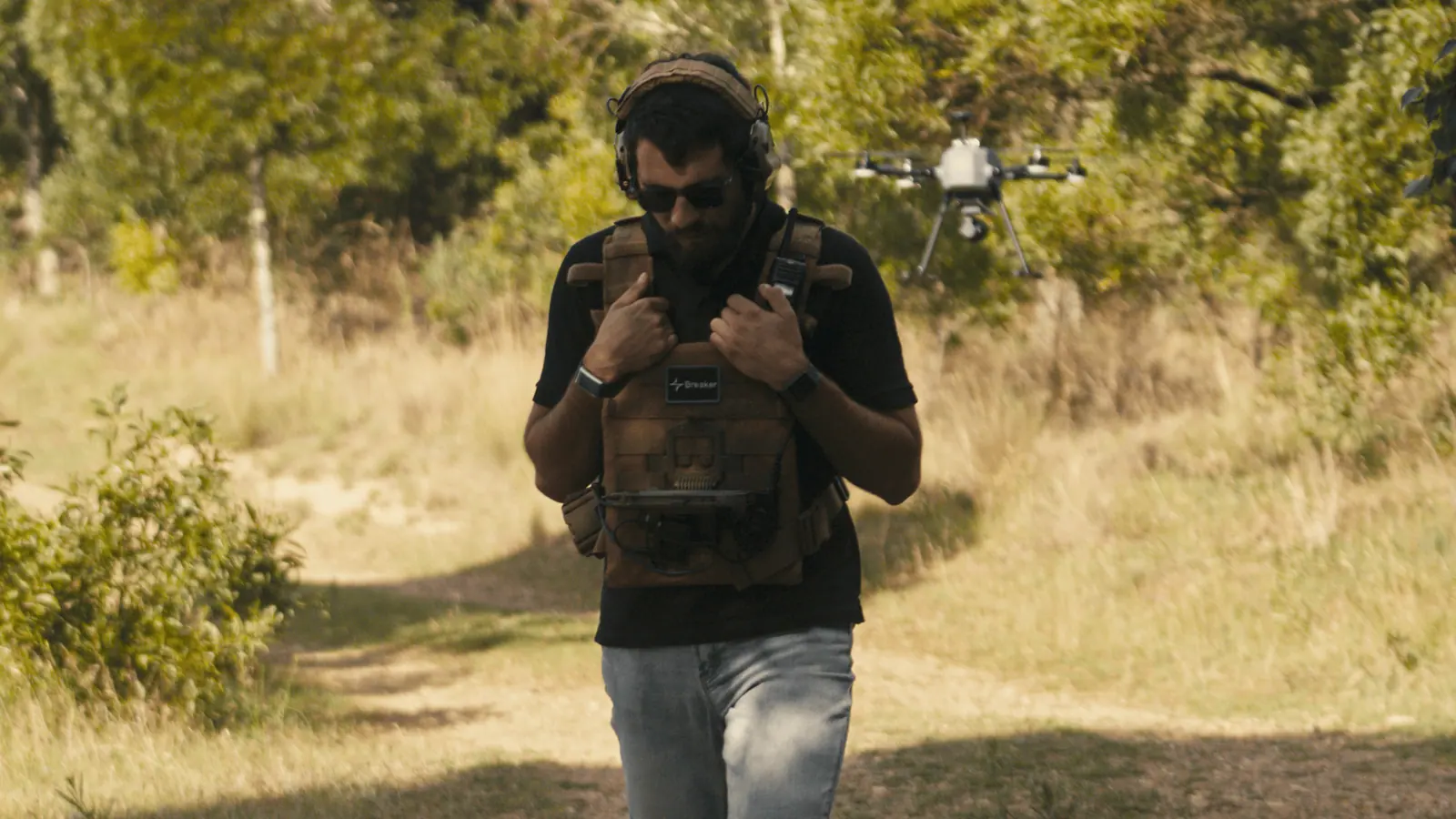
Foxglove, the robotics data and visualization platform, has published a case study on how Breaker builds and tests Avalon. Avalon lets one operator command a team of robots across air, land and sea by voice. The case study sets out how Foxglove helps Breaker's engineers see what Avalon observed, decided and did on every run.
Voice-first autonomy only matters if it works in the environments our customers actually operate in. Foxglove helps us turn complex system behavior into something we can analyze, improve, and stand behind with confidence.
Matthew Buffa, Co-founder and Co-CEO, Breaker
Why the data matters
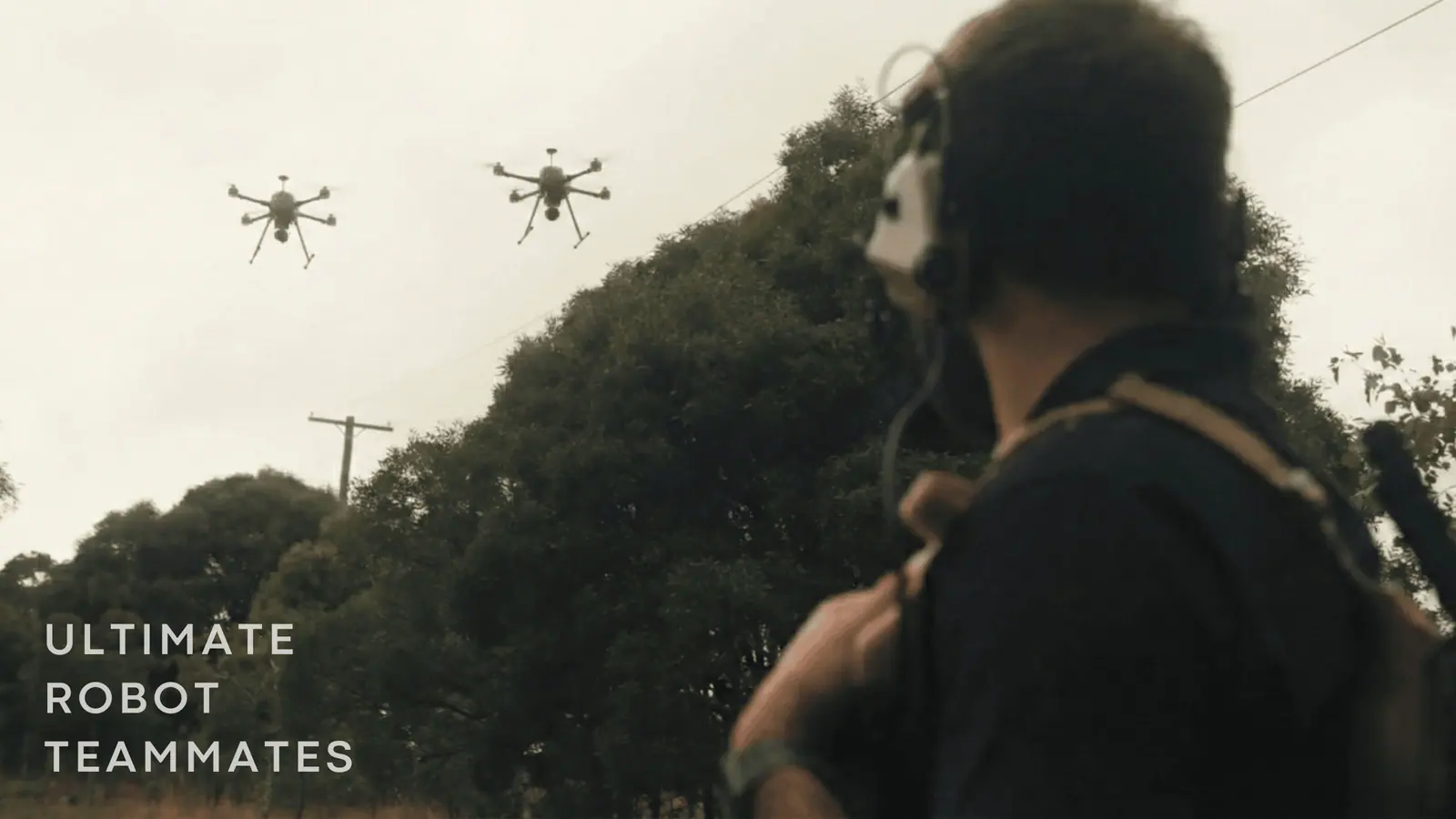
An operator who briefs a robot team by voice has to trust what the team does next. That trust is earned on the test range, one run at a time. Every field run produces camera feeds, system state, logs and map data, and each one holds the answer to why Avalon acted as it did.
Before Foxglove, finding that answer was slow. Engineers parsed logs by hand and maintained custom tools to piece a run back together. Jack Scott, a robotics engineer at Breaker, described the old workflow to Foxglove as "archaeological"1.
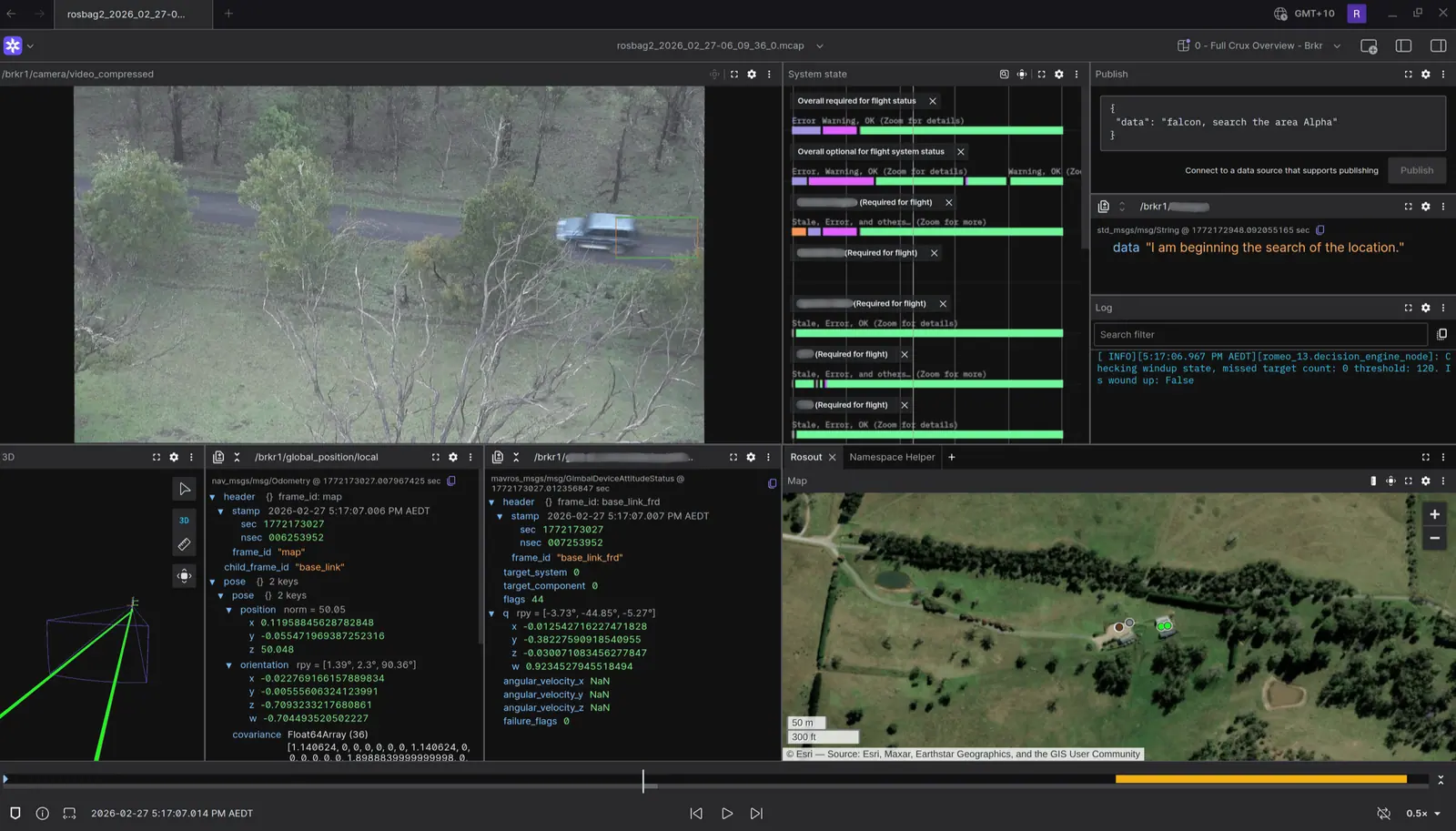
The console above was captured during a live flight. It shows five things at once:
- Full system overview. The sensor, autonomy and communications stack all running together on the aircraft.
- Real-time target detection. The downward camera tracks a moving car, and a world-frame ray projects it into 3D space to fix its location.
- The voice command loop. The operator's command, "Falcon, search the area Alpha", goes out over standard push-to-talk radio. Avalon replies, "I am beginning the search of the location." The whole cycle runs over unmodified radio.
- System health. Every required flight system turns green, and a live log shows the autonomy state for debugging.
- A geo-referenced map. The drone's position and each identified object sit on satellite imagery, building a persistent picture of the area in real time.
What changed
Foxglove now sits inside Breaker's engineering workflow at four points1:
- Mission review. Engineers scrub through MCAP recordings of field runs to see what Avalon observed, decided and executed.
- Live development. Robot activity is visualized in real time across the local network.
- Simulation. Full-system behavior is checked in simulation before it reaches hardware.
- Security. Self-hosted and air-gapped deployment keeps ITAR-sensitive work inside controlled environments.
The results show up in how fast the team moves. Replacing custom log parsing cut internal tooling overhead by at least 70%1. New engineers now contribute to run analysis in their first week, down from three to four weeks1.
Built for defense
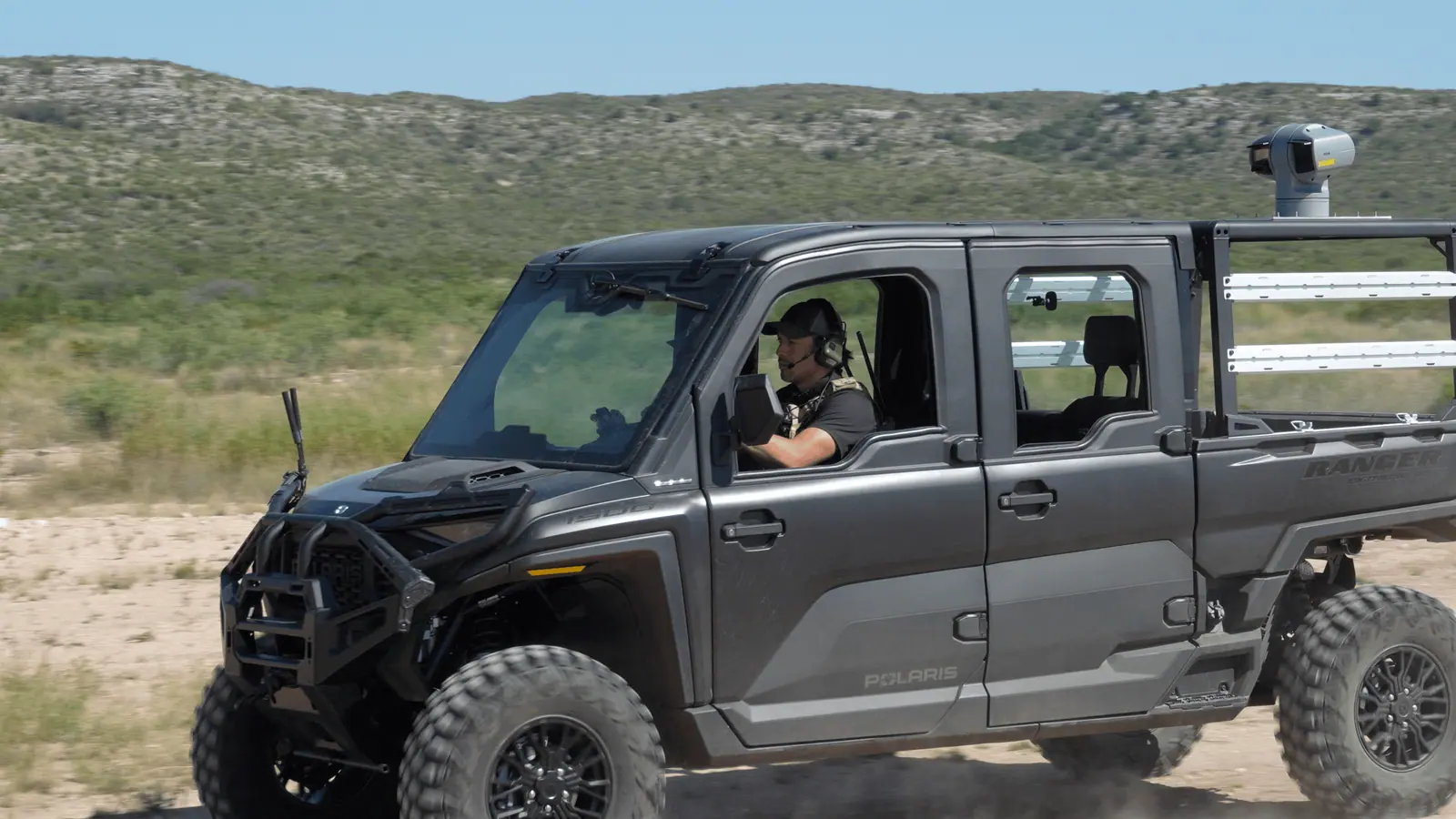
Breaker's customers are defense and government organizations, and much of the work is ITAR-sensitive. Tooling that only runs in a public cloud would be of no use. Foxglove supports self-hosted, air-gapped and customer-controlled deployments1, so field data stays where the customer requires it to stay.
That is the standard Avalon itself is held to. It runs on the robot's own compute, with no cloud connection, in environments where communications are denied. The tools that prove it works have to meet the same bar.
The full case study is on Foxglove's website.