
Breaker flies a talking Skydio X10D with the US Army at AUSA 2026

At AUSA 2026 in Washington, DC, Breaker joined the US Army's Formation-Based Layered Protection Future Capability Directorate on the Army Futures and Concepts Command stand. The flight was part of the Army's Advanced Reconnaissance Kit Family of Systems, delivered with the US Army Geospatial Center. Across the three days of the show, 12 to 14 October, Breaker flew a Skydio X10D running Avalon, its onboard AI agent for human-machine orchestration. A single operator talked to the drone over a standard push-to-talk radio, and the drone talked back.
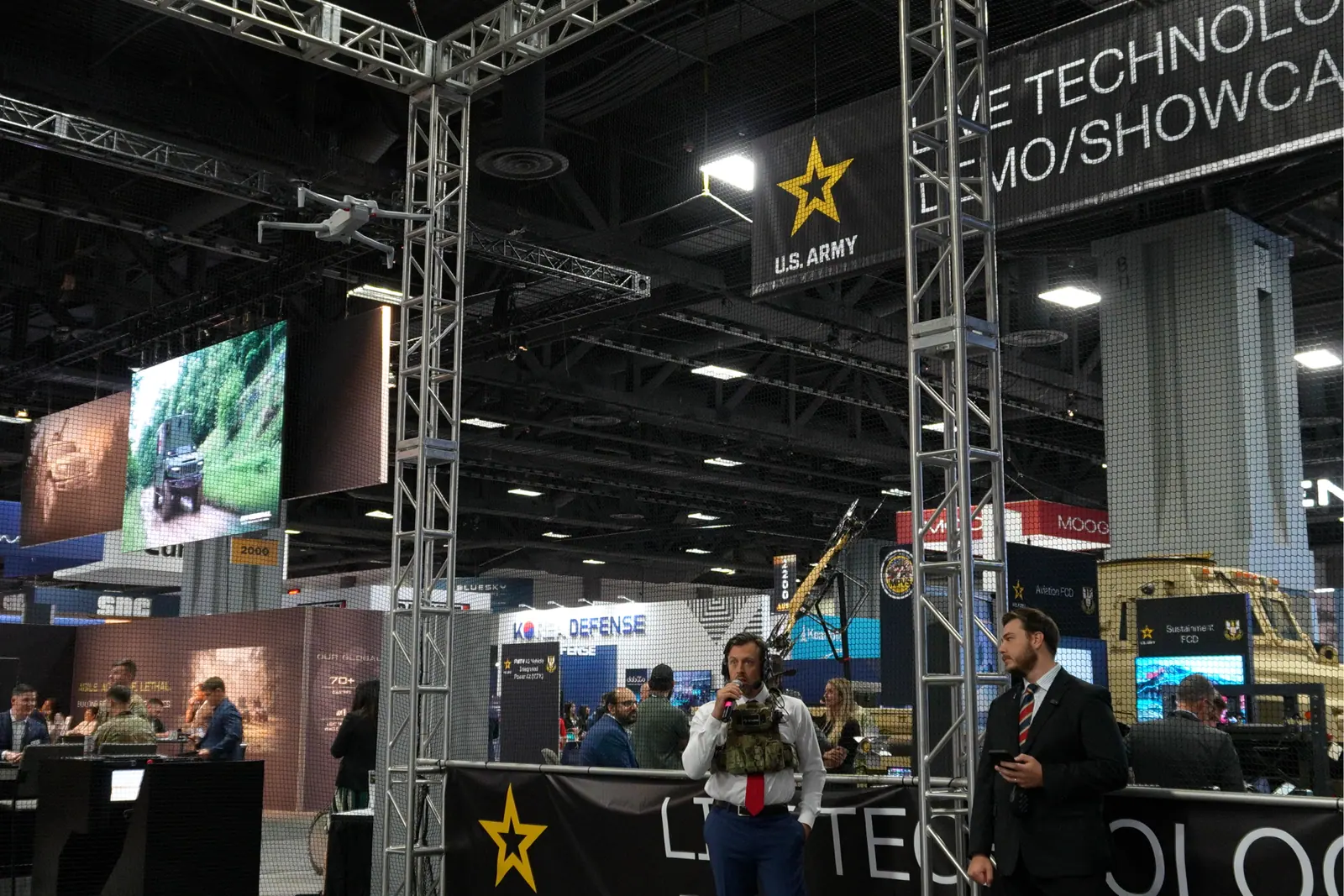
The demonstration ran live, again and again, in front of crowds. The X10D flew inside the netted fly zone at the center of the booth, in the main exhibition hall, in the Live Tech Demo Area.
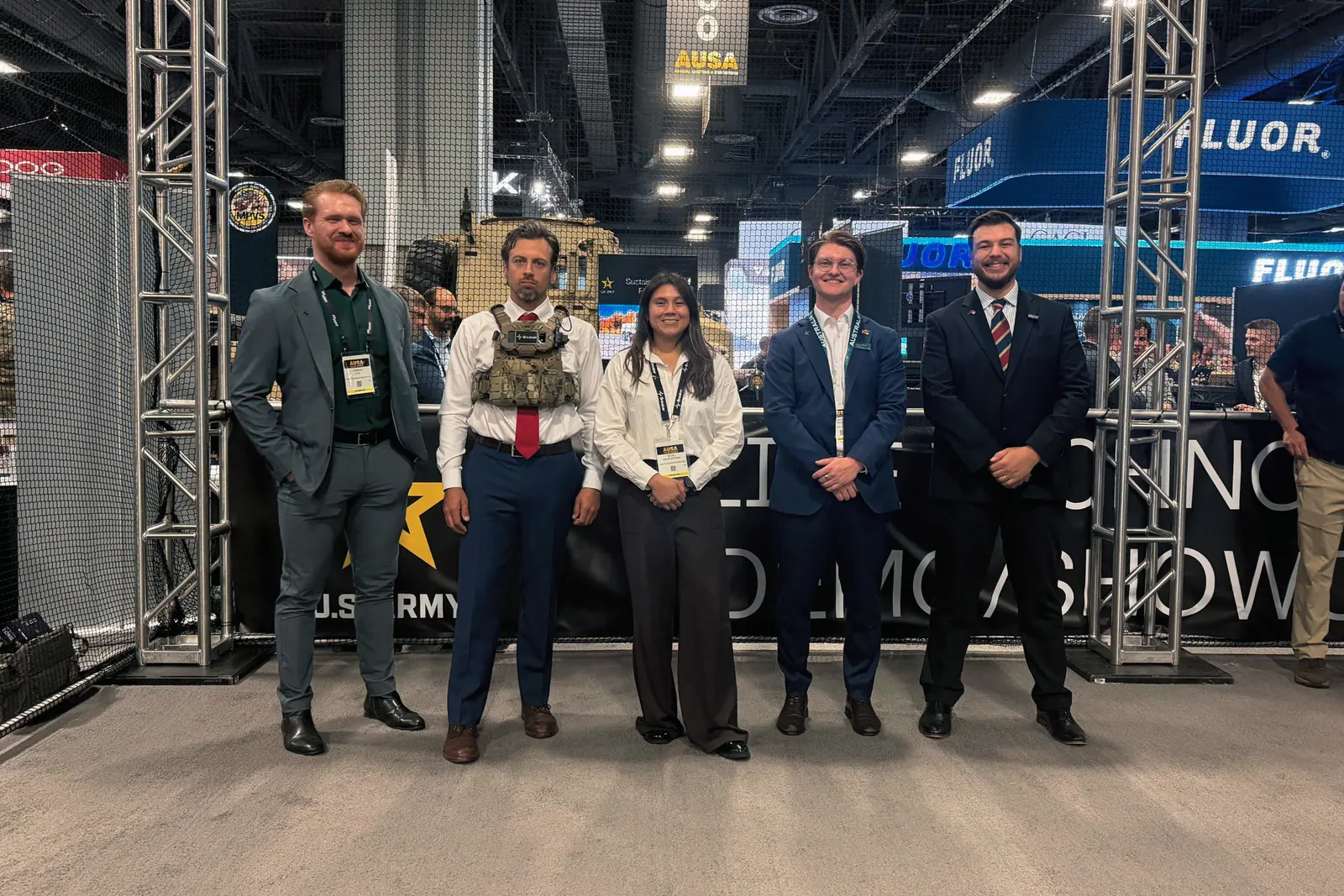
Formation-Based Layered Protection
Formation-Based Layered Protection is the Army's concept for protecting a fighting formation from top to bottom. It brings sensors, weapons, information and soldiers together into one converged system, layered from the division down to the squad1. It has three parts: sensors that detect threats in real time, automation that processes what the sensors see and recommends action, and effectors that respond, kinetic and non-kinetic alike1.
The concept has its own Future Capability Directorate, based at Fort Leonard Wood, Missouri, and it is the team that invited Breaker to fly at AUSA. Its job is to give formations a comprehensive, cooperative mix of protection across all forms of contact in contested environments1. It does that through experimentation, putting new technology in front of soldiers before the Army commits to buying it. The directorate sits within the Army's futures command, under which every future capability directorate shapes tomorrow's force.
FASCOM, the Army's new autonomy command
The Army's futures command took on a new mission during the show. On the opening day of AUSA, the Army redesignated Futures and Concepts Command as the Army Futures and Autonomous Systems Command, or FASCOM2. The command will be led by a three-star general and will bring together work from five existing commands and centers2. Its remit is to put autonomy into every part of how the Army fights, at every echelon of the force.
This goes beyond drones. FASCOM will pioneer operational concepts that harness autonomous capabilities across all warfighting functions.
General Christopher LaNeve, Chief of Staff of the Army, October 2026
The ARK Family of Systems
The capability Breaker flew with came from the Advanced Reconnaissance Kit Family of Systems, or ARK. ARK is the Army's program to modernize automated and semi-automated reconnaissance of routes, areas and zones3. It combines 3D lidar, augmented reality goggles, the Android Tactical Assault Kit and next-generation satellite communications3.
ARK replaces ENFIRE, the reconnaissance and surveying kit used by Army and Marine engineers, which has more than 2,500 kits fielded3. Soldiers first assessed it at Camp Humphreys in Korea3, and a military police variant has since been used in training4.
The program is run by Product Director Combat Terrain Information Systems, which operates out of the US Army Geospatial Center, part of the US Army Corps of Engineers5. The Geospatial Center team led the integration with Breaker in the weeks before the show. Kathryn Kash, Deputy Product Lead for Combat Terrain Information Systems, also spoke to the crowds during the demonstrations.
For the Army, the pairing made a clear point. ARK gathers reconnaissance data at scale, and Avalon lets a soldier ask for it by voice, in the moment, without a screen.
What the Army is asking for
The Army's demand signal is clear. Soldiers are being asked to work with more robots, and every new screen and controller adds to their workload. The Army wants autonomy that lowers that load rather than moves it. Formation-Based Layered Protection writes the same goal into its own concept: automation that recommends action "to reduce cognitive load on Soldiers"1. In September, Army researchers described air and ground autonomy teams that plan and execute missions "based on operator intent", commanded "using natural language instruction". They said the approach "significantly reduces the cognitive burden on Soldiers"6.
Training is the other cost. A system that needs weeks of instruction cannot spread across a formation quickly. When Breaker demonstrated Avalon on the Boxer with Rheinmetall, a crew member with less than 30 minutes of training commanded a swarm of drones by voice7.
Human-machine teaming is the third signal. The Army wants robots that work as part of the team, not equipment the team has to babysit. That is what Breaker built Avalon to do.
The Skydio X10D
The X10D is one of the most advanced small drones in service. It is on the Defense Department's Blue UAS Cleared List and is built in the United States8. It is also the Army's choice for its Short Range Reconnaissance program. In March 2026, the Army ordered more than 2,500 of them in a $52 million buy for units preparing to deploy9.
The X10D is highly autonomous in its own right. It navigates without GPS using six onboard navigation cameras, avoids obstacles in total darkness with NightSense, and switches radio channels to hold its link under jamming98. Skydio's mission autonomy already handles the hard parts of flight.
Avalon, built on Skydio's autonomy
For AUSA, the X10D flew as the uncrewed air element of the ARK demonstration. Breaker's agent runs entirely on board and sits on top of Skydio's autonomy rather than replacing it. Skydio flies the aircraft. Avalon turns what the operator says into a series of coordinated machine actions, then reports back in plain speech. The result shows how easily Avalon builds on a capable platform's own autonomy.
Operators are busy. They're busy driving, flying and fighting, and logging in is not always an option. If you know how to key your radio, you know how to work with Breaker.
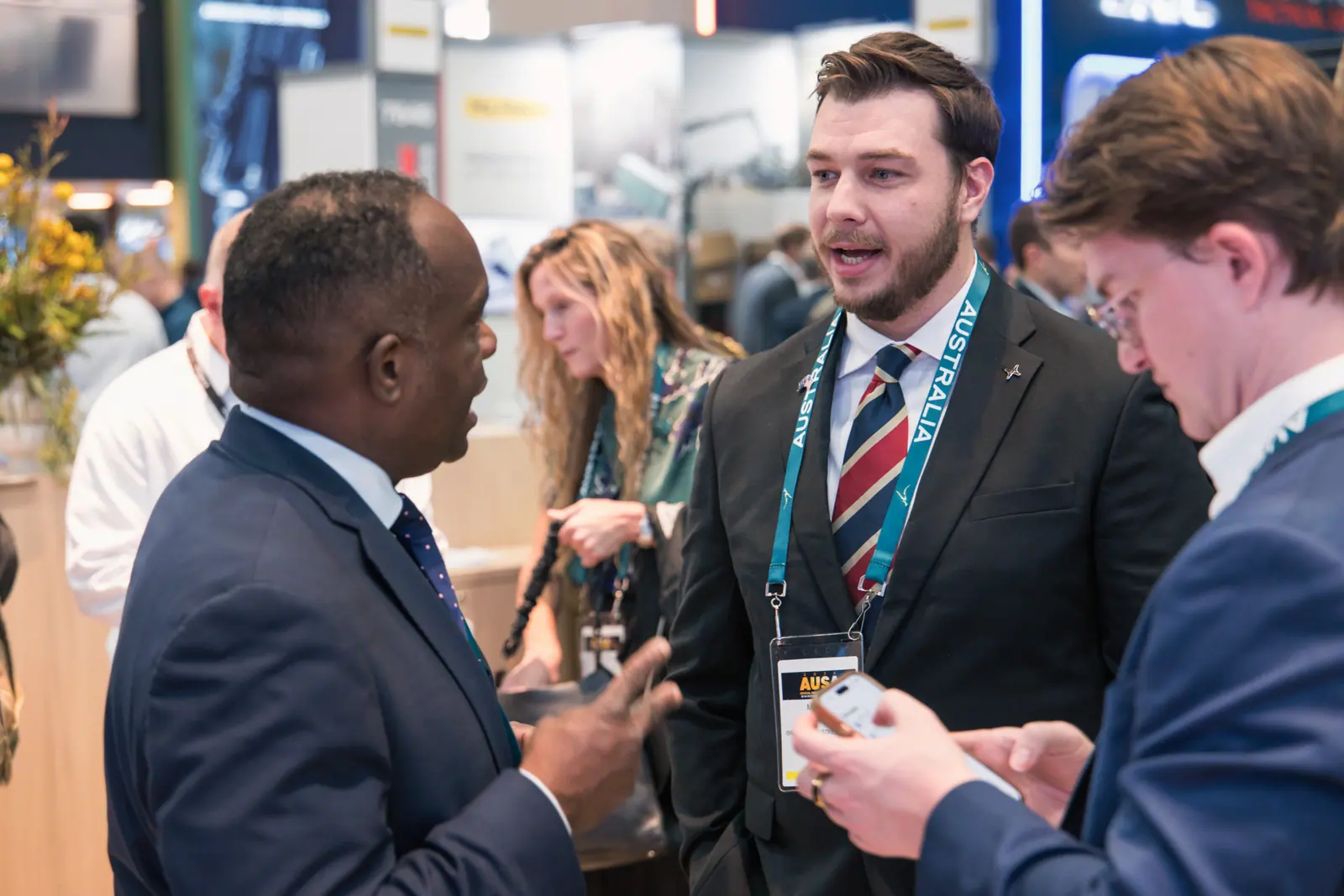
Matthew Buffa, Co-founder and Co-CEO, Breaker, at AUSA 2026
Breaker's Mission Operations Specialist flew the demonstration. He served 14 years in US Special Operations as a joint terminal attack controller, directing aircraft from the ground, and at Breaker he applies the same principles to commanding uncrewed systems. The drone answered to the call sign Viper.
Command and query, by voice
The operator did more than issue orders. He asked Viper questions and got real-time answers that were aware of the mission and specific to what the drone could see, all over his push-to-talk radio. Two-way conversation of this kind is unique to Breaker's Avalon.
It knows its team. Asked who was on its team, Viper reported two members, Viper and Bullfrog, with Viper in the lead. That matters because Avalon's agents coordinate with each other. The operator only ever talks to one team leader, however many robots sit beneath it and however different they are, so one person can command a large mixed team without managing each machine.
It describes what it sees. The operator pointed Viper at the vehicle bay in the booth next to the demonstration area and asked about the vehicle there. Viper described it as an armored, green, military vehicle, static, and seen seconds earlier. A detection on its own is just a box on a screen. Described in words, it becomes information a soldier can act on without looking down.
It answers the crowd's questions. In one run, the operator asked for the nearest bathroom. Viper gave the distance and bearing from the operator, 106 meters on a bearing of 313, then turned its camera to point the crowd toward it. It was a light moment with a serious point. Every answer came from the mission briefing Avalon carries on board, so the drone understands the area the way the operator does. It then put that knowledge to work through its own payload, aiming the camera where the operator needed to look.
That is why payload integration matters. Whatever sensors or effectors a platform carries, Avalon can use them, and can share them across the whole team of agents.
The live flight showed a subset of Avalon's capability, chosen to suit a netted indoor space. The full mission ran in simulation on the Australia Pavilion, at booth 7627, through the same voice interface.
Looking ahead
Our thanks go to the Army Geospatial Center team, who made the ARK integration possible, and to Skydio for supporting the demonstration on site.
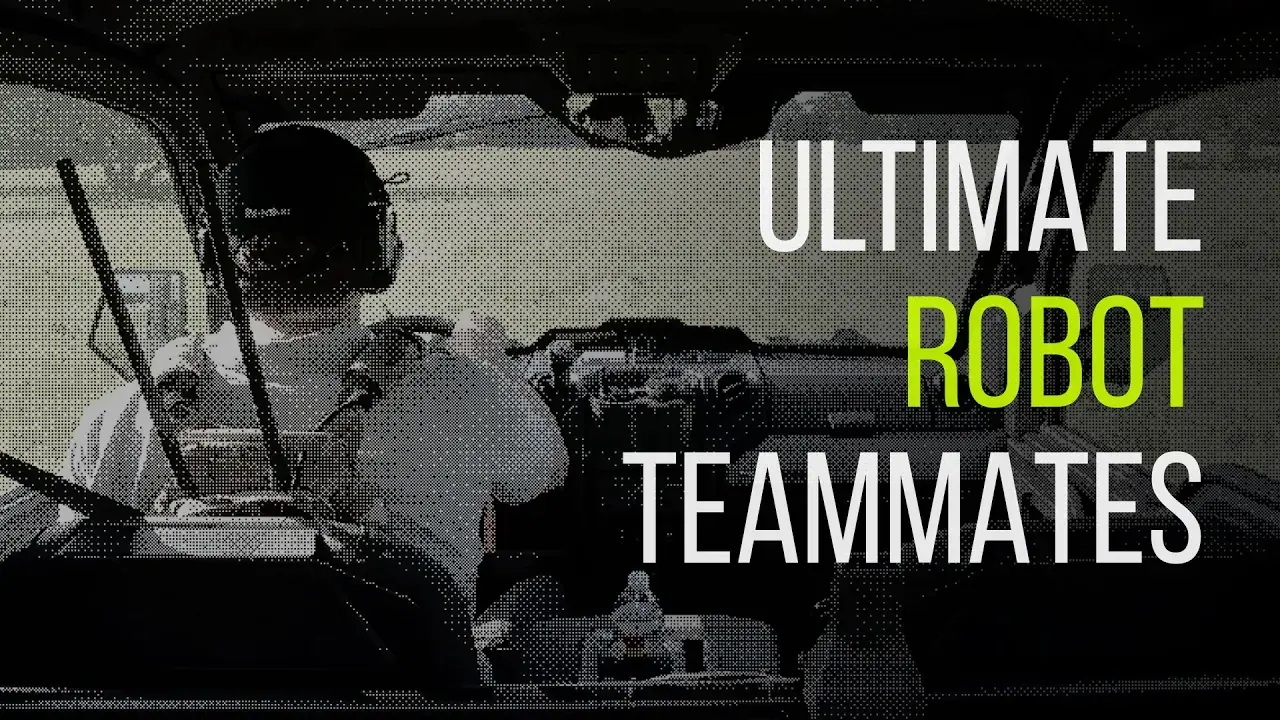
We really look forward to continuing to work with both the Skydio team and the team at Formation-Based Layered Protection to continue to drive AI orchestration for the warfighter, ensuring and developing the ultimate robot teammates for our warfighters.
- 1 US Army Futures Command, Directorate of Integration, Formation Based Layered Protection (FBLP), special notice W911NF-25-R-FBLP, 13 January 2025. ↩
- 2 Breaking Defense, LaNeve 'redesignates' Army's Futures and Concepts Command as new FASCOM autonomy command, October 2026. ↩
- 3 CPE ISW, Engineers and Soldiers Assess Reconnaissance and Surveying System at Camp Humphreys, 5 March 2025. ↩
- 4 CPE ISW, Advanced Recon Training, 22 July 2026. ↩
- 5 US Army, PD CTIS Equipment Supports Remote Military Station Survey and Rebuilding. ↩
- 6 US Army, Army scientists reveal integration, communication advancements in autonomy innovations for the future Soldier, 10 September 2026. ↩
- 7 Rheinmetall, "Rheinmetall and Breaker join forces to bring Human Machine Teaming to armoured vehicles", press release, 6 October 2026. ↩
- 8 Skydio, Skydio X10D. ↩
- 9 Army Recognition, U.S. Army places $52M order for 2,500 Skydio X10D ISR drones for platoon reconnaissance, March 2026. ↩