
The DoD's most expensive capability gap
The Department of Defense has put $100 million behind a problem most people don't know exists. In January 2026, the Defense Innovation Unit launched the Autonomous Vehicle Orchestrator challenge with the Defense Autonomous Warfare Group and the Navy1. It asks for software that turns a commander's intent into coordinated action across whole fleets of robots. The prize money signals urgency, not generosity. After decades of building platforms, control stations and onboard AI, the Pentagon is missing the layers that matter for fighting at scale.
Three layers that work
Start at the bottom. The platform layer is mature, because the robots themselves work. Reapers fly persistent surveillance missions, loitering munitions strike beyond line of sight, and uncrewed vessels patrol coastlines. The Replicator initiative awarded contracts to more than 30 hardware and software companies, three quarters of them non-traditional defense contractors2.
Above it sits the control layer. Ground control stations, data links and operator interfaces let one person manage one platform. NATO's STANAG 4586 standardized how drones are controlled, and open-source tools such as QGroundControl handle mission planning and telemetry. This layer handles the mechanics of piloting one robot at a time.
Then comes the autonomy layer, the onboard intelligence that lets a platform work without constant input. Modern systems follow waypoints, avoid obstacles, track targets and return home when communications drop. DARPA's Assured Autonomy program and many commercial efforts have pushed this layer forward quickly.
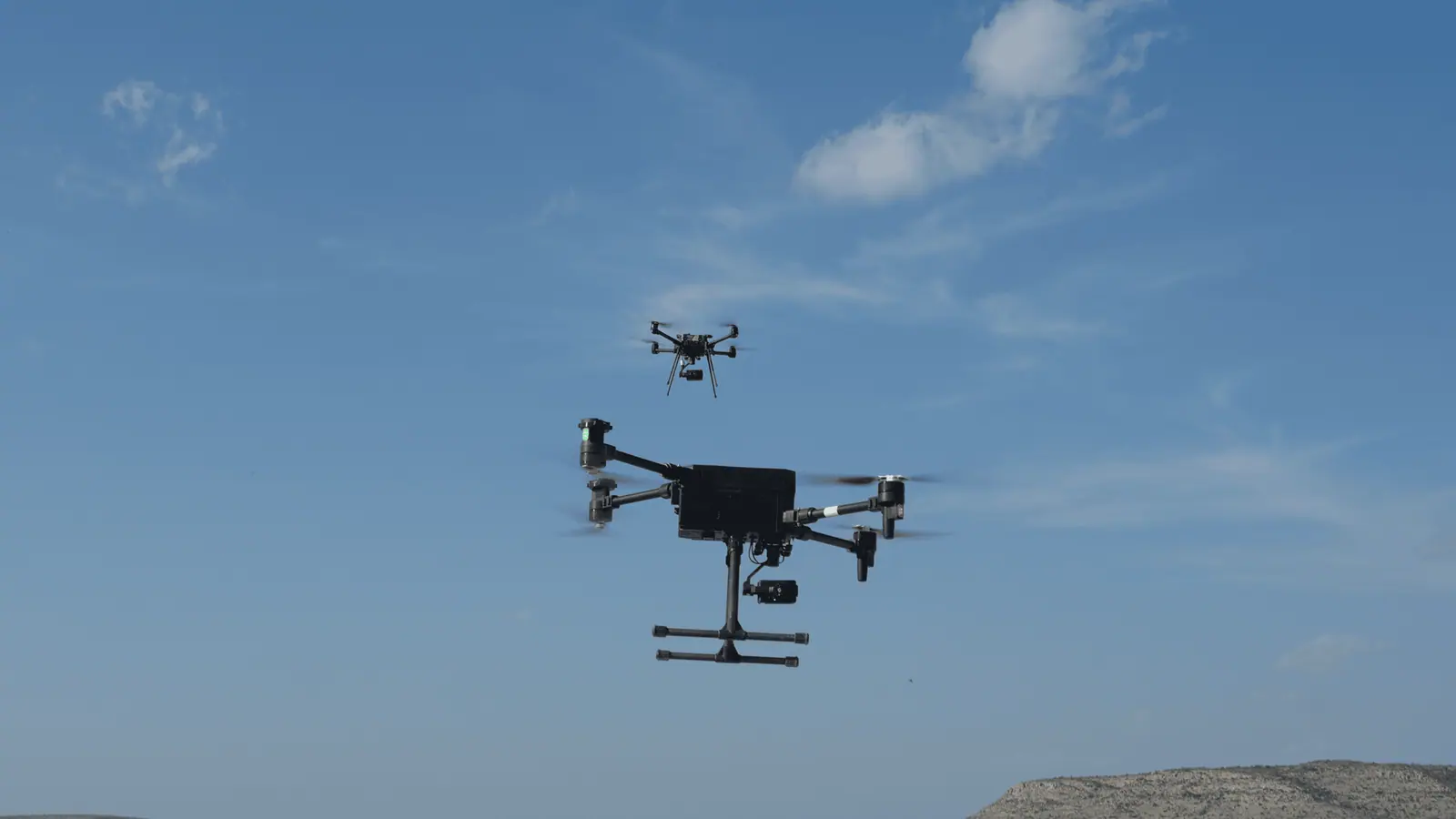
These three layers function. What they cannot do is produce the force the Pentagon now wants: hundreds or thousands of autonomous systems fighting as coherent formations across air, land and sea.
The orchestration gap
Between what one platform can do and how a force fights sits a gap the Defense Department has only recently named. The DIU challenge asks for a layer that converts commander intent from voice, text or haptic input into coordinated machine action3. That is the orchestration layer. It turns a plain command, such as "establish a picket line five kilometers out and prioritize fast movers", into tasks for dozens of different platforms.
Lieutenant General Frank Donovan, who leads the Defense Autonomous Warfare Group, set out the requirement:
We want orchestrator technologies that allow humans to work the way they already command, through plain language that expresses desired effects, constraints, timing, and priorities, not by clicking through menus or programming behaviors.
Lieutenant General Frank Donovan, Defense Autonomous Warfare Group, January 2026
The bar is high. The orchestrator must interpret natural language, break intent into platform tasks, allocate the fleet, monitor execution and adapt when conditions change. It must also work on the robots the military already owns, without modifying their autonomy. And it must keep working when the network does not. The challenge states that it "may also eventually need to be run in a disconnected, edge environment without access to the cloud"1.
The domain gap
Above orchestration sits a second gap, between domains. Autonomous systems grew up in service silos, and each domain built its own architecture: STANAG 4586 for air, JAUS for ground and UMAA for maritime. None was designed to work with the others.
The problem is old. In 2005, the Government Accountability Office reported US Central Command's view that interoperability problems arose because the services' drone programs "had been service-specific and insufficiently attentive to joint needs"4. Two decades on, the description still fits.
A domain bridge would allow what combat actually requires. A drone would give overwatch to a ground robot convoy. Surface vessels would coordinate with loitering munitions to defend a coastline. Experiments such as the Army's Project Convergence have shown pieces of this, but none is yet an operational capability.
Why the numbers don't work
The missing layers are more than technical gaps. They block the force structure the Pentagon is trying to build, because "unmanned" systems still consume people. Keeping a single MQ-9 orbit in the air can take more than 150 personnel5. The commander of Air Force Special Operations Command summed it up:
That doesn't seem too unmanned to me.
Lieutenant General Tony Bauernfeind, Commander, Air Force Special Operations Command, September 2023
The shortage is real. In 2022, the Marine Corps had trained only 38 of the 68 MQ-9 pilots it needed6. Multiply one operator per platform across thousands of drones, and the arithmetic fails.
The interfaces fail too. A ground control station built on menus and map clicks works for one platform. For twenty it overwhelms the operator, and for two hundred it is useless.
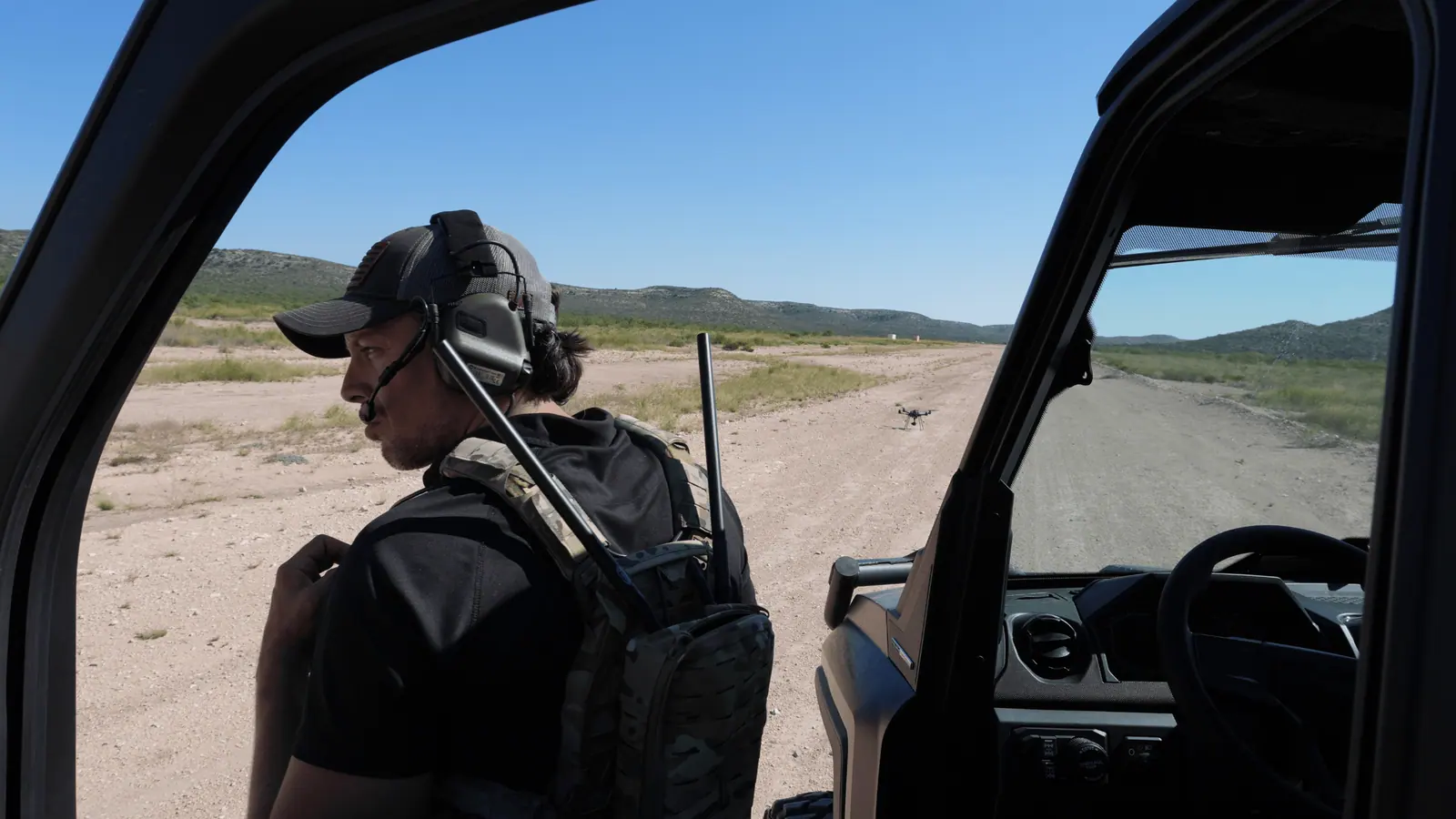
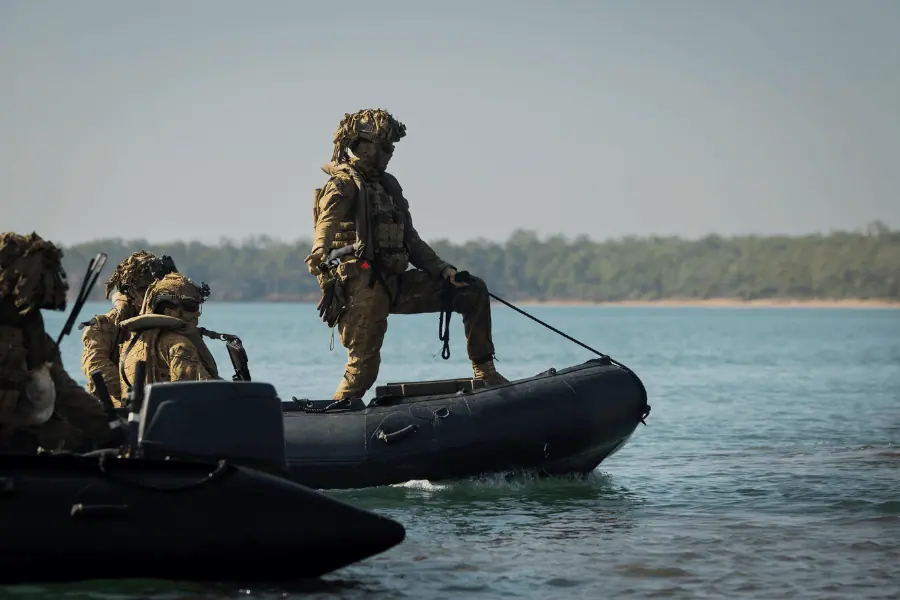
The warfighter's situation makes it worse. A pilot cannot look away from the cockpit to work a touchscreen. Dismounted infantry cannot carry laptops through contested ground, and small boats have no room for a control station. Voice is often the only input left, but it has to be voice that works under stress, not a list of memorized keywords.
What the prize admits
The challenge shows the Defense Department knows what it is missing. First sprints begin within ten days of selection, and the whole effort runs six months1. That is emergency tempo for a gap that has grown quietly for years.
Orchestration alone will not close it. Without a domain bridge, commanders get better control of an air swarm, a ground swarm or a maritime swarm, but not a joint task force. The requirement is both layers together: plain-language intent turned into coordinated action across any mix of platforms and domains, under contested communications.
The next phase of defense autonomy will not be won by the best drone or the fastest vessel. It will be won by whoever solves coordination. The platforms are ready, the control interfaces exist and the onboard AI works. What is missing is everything that turns machines into teams.
- 1 Breaking Defense, DIU offers $100M in prizes for voice-controlled, AI-enabled drone swarm orchestrator, 15 January 2026. ↩
- 2 US Department of Defense, Structuring change to last: an update on innovation at DoD, August 2024. ↩
- 3 ExecutiveGov, DIU, DAWG and Navy launch $100M prize challenge for autonomous vehicle orchestrator, January 2026. ↩
- 4 US Government Accountability Office, Unmanned Aircraft Systems: DOD Needs to More Effectively Promote Interoperability and Improve Performance Assessments, GAO-06-49, December 2005. ↩
- 5 National Defense, Autonomous drone tech 'top acquisition priority', AFSOC commander says, 12 September 2023. ↩
- 6 Breaking Defense, The Marine Corps can't train MQ-9 operators fast enough, March 2023. ↩