
Breaker joins the Chief of Army Symposium industry panel at Land Forces 2026
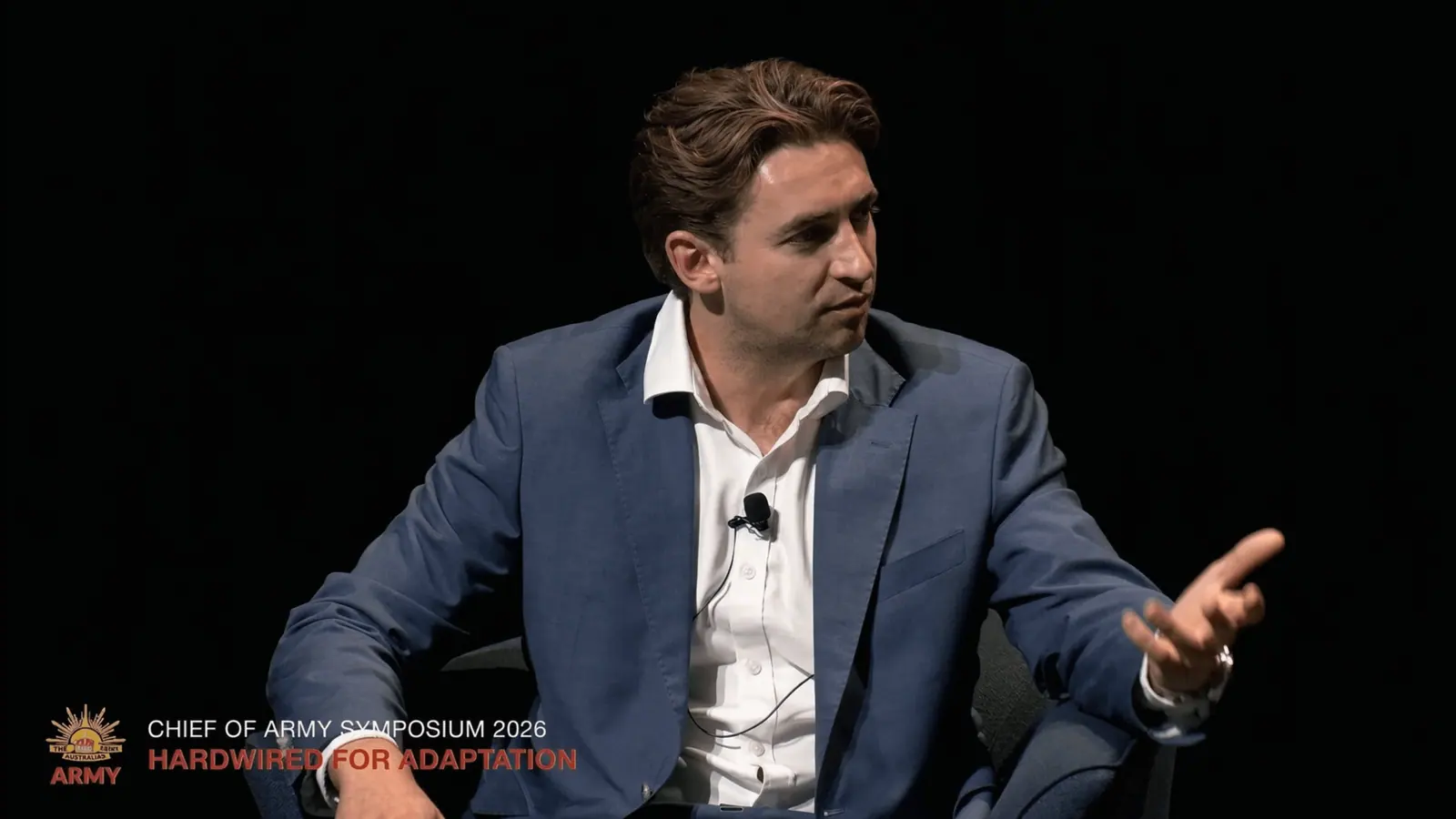
On 7 October, the second day of Land Forces 2026 in Perth, Breaker co-founder and Co-CEO Michael Irwin joined "The View from Australian Defence Industry", a panel at the Chief of Army Symposium1. He sat alongside David Goodrich OAM of Anduril Australia, Sarah Bailey of PentenAmio, Andrew Gresham of BAE Systems Australia and Stuart Morse of Integrated Design & Engineering Solutions. Major General Kurt Brown CSC, the Army's Head of Land Capability, moderated.
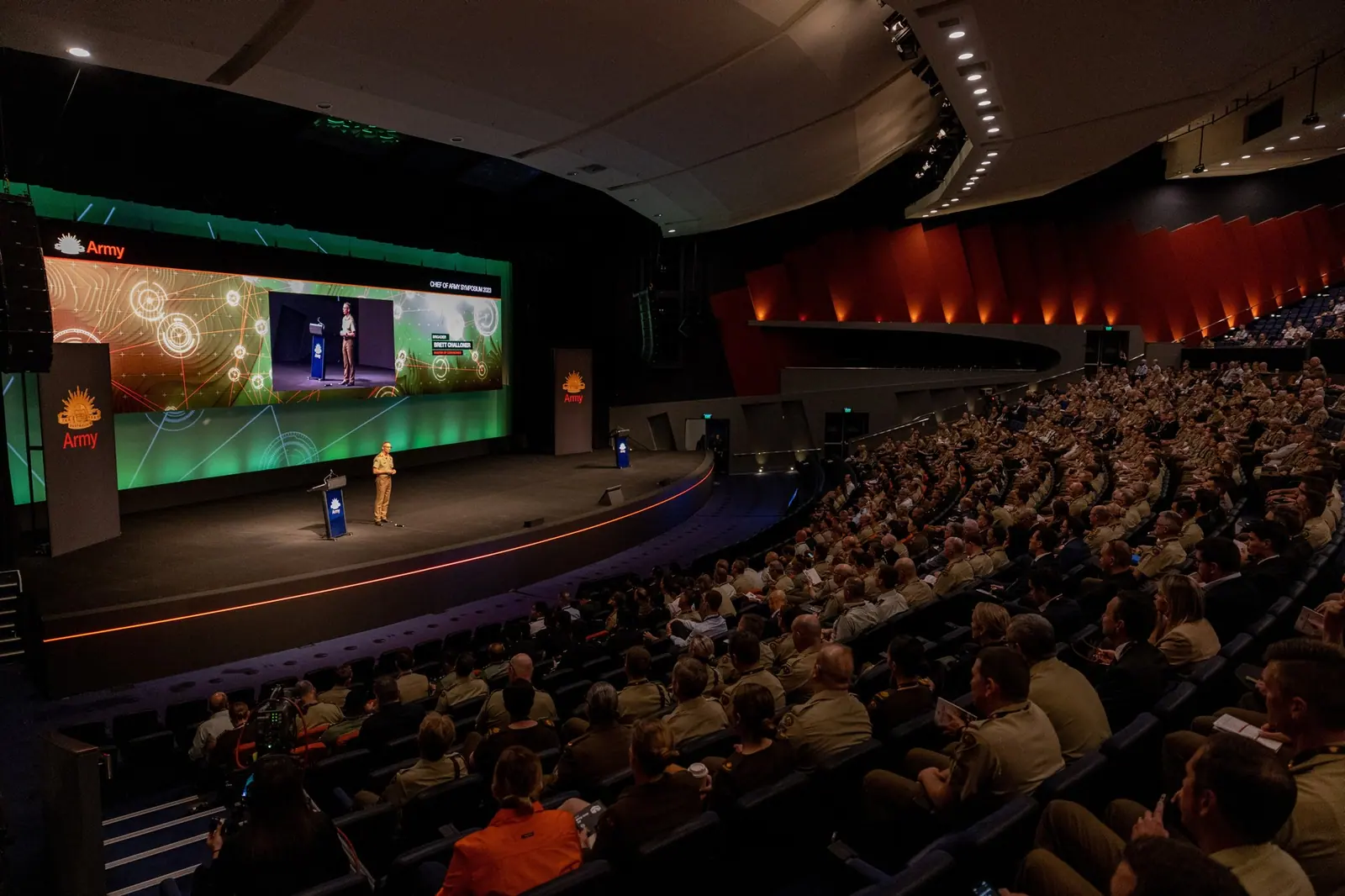
The symposium's theme was "Hardwired for Adaptation"2, and the panel asked industry how it is keeping pace with a fast-changing character of war. Breaker was the only startup on the stage.
Brown already knows Breaker's work. In July, he led a delegation of the Army's senior land capability leaders to Breaker's Austin headquarters. In September, he told industry that Army is normalizing autonomous systems and moving to employ them at greater scale3. The panel came in the same week that Rheinmetall and Breaker announced human machine teaming for the Boxer CRV, on show at two stands across the exposition.
What is Breaker, and how is it approaching the changing character of warfare?
Michael introduced Breaker as a small, new entrant with one focus: making people more effective with autonomous systems. Breaker builds an autonomy stack that deploys across robotic platforms and lets people work with robots the way they work with a team. Operators talk to the robots, the robots talk back, and the robots make decisions within their team. He gave three examples of busy operators who need this: a vehicle commander tasking drones to clear a route while still fighting the vehicle, a helicopter pilot flying with drone wingmen, and dismounted infantry using robots to watch their flanks.
He then turned to the symposium's theme of adaptation. AI is cutting the cost of writing software so quickly that Ukraine's two-week update cycle will shrink further, he argued, so autonomous systems must be built to take new instructions in the field. He closed on the Rheinmetall partnership to bring that capability to the Boxer.
Our goal is to have very busy people work with autonomous systems.
How do you see the tactical edge evolving?
Michael called the tactical edge the last frontier of autonomy. Control has moved steadily from large systems down to smaller platforms. The next challenge is managing many of them while the operator does another job, such as keeping situational awareness or running a larger platform. The enabler, he argued, is intelligence on board each robot. A platform that understands the mission briefing can survive electronic warfare and be cut off from its operator, yet still carry out what the operator intended and return.
Those robots also need information to decide well. He pointed to David Goodrich's description of Lattice connecting large distributed systems, and said autonomous platforms must draw from those networks too, whether Lattice or ATAK. The tactical layer, he concluded, is what finally breaks defense's one operator to one robot model, and software is how it gets there.
We definitely see the tactical layer as the next key enabler for autonomy.
How can Army improve its requirements to keep pace with faster development cycles?
Michael noted that Breaker is far smaller than Anduril or BAE Systems, so it engages much earlier in the requirements cycle than the primes do. For a company at that stage, he said, programs such as Army Innovation Day are excellent. They draw on early-stage programs in the United States that Breaker has taken part in, and in his view Army Innovation Day improves on them. Putting technology into soldiers' hands is what matters most to an early company building something new. Their feedback on what works and what does not lets Breaker iterate faster and build a system that is more competitive and more resilient.
He also credited Army's signaling. Breaker was founded partly on the clear call for more autonomy in the Defence Strategic Review. His ask, shared by much of industry, was simple: the more Defence talks to industry, the better the products industry can build for Defence.
For us, absolute gold is when we can actually hand it to someone and get their input on it.
What is the one technology area you are focusing on?
Asked for the one technology area Breaker is focused on, Michael chose autonomy, which he admitted was the obvious answer. Australia's defense force is constrained by people, and autonomy is how that constraint stops binding. If a small team can command a large group of autonomous systems, Australia gains mass without needing more soldiers to provide it. That, he said, is the critical technology Breaker wants to deliver.
If we can have a small group of people be able to work with and command large groups of autonomous systems, that's one of the critical technologies that we would love to deliver.
Conclusion
One argument ran through all four of Michael's answers. Autonomy matters most to the people who have the least time for it: the crew commander, the pilot and the soldier on foot. It reaches them when the intelligence sits on the robot, when the software can be updated as fast as the fight changes, and when soldiers get to test it early and often. For a country short of people, that is how a small force commands mass. With the Boxer integration underway, Breaker is now building that capability with Army and Rheinmetall.
- 1 Land Forces 2026 program, "Panel: The View from Australian Defence Industry", 7 October 2026. ↩
- 2 Australian Army, Chief of Army Symposium 2026. ↩
- 3 Department of Defence, Army updates industry on capability priorities, 3 September 2026. ↩