

Australian Army land capability leaders visit Breaker in Austin
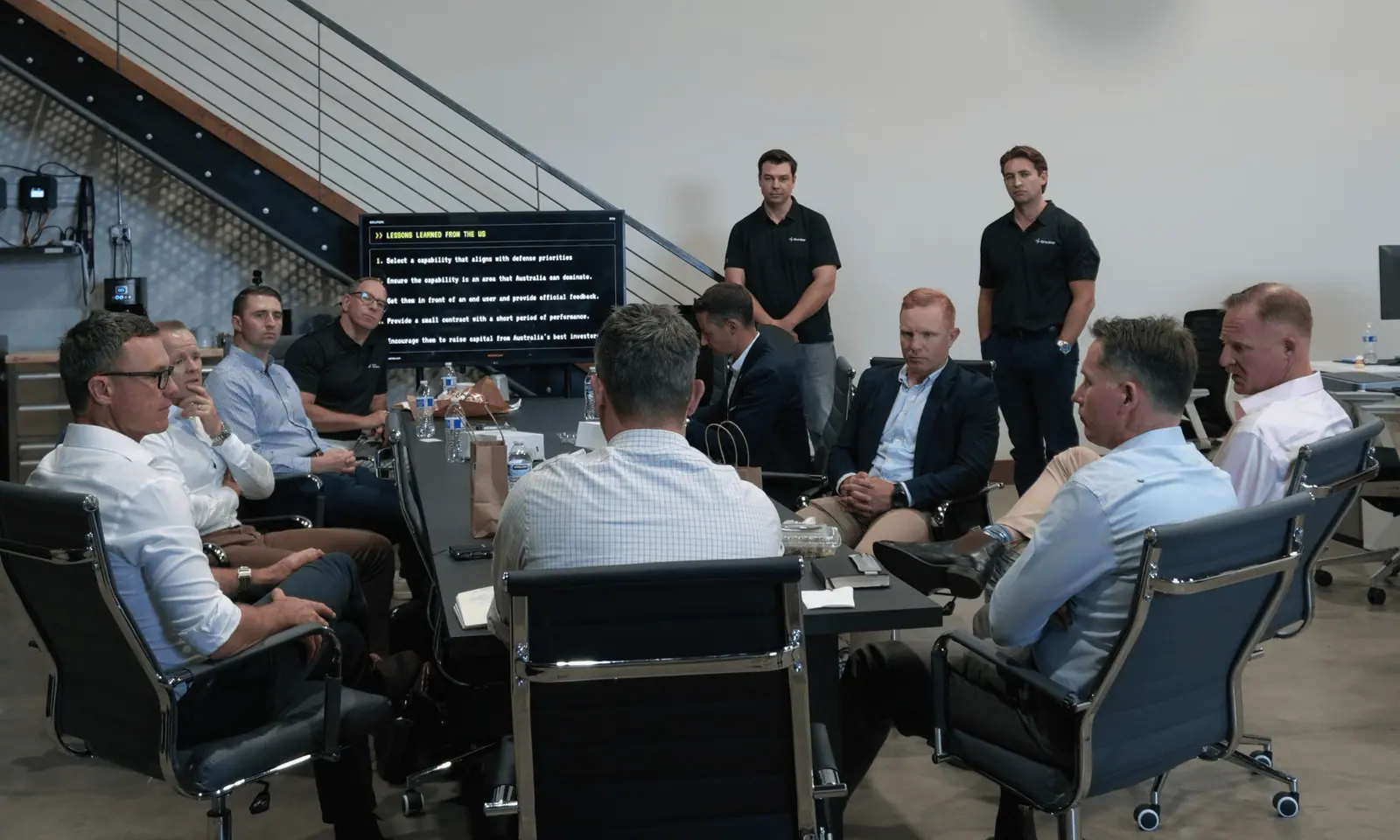
On 28 July 2026, Major General Kurt Brown, the Australian Army's Head of Land Capability, led a delegation of the Army's most senior land capability leaders to Breaker's headquarters in Austin, Texas. An Australian company hosted Australian generals in the United States, on software built for both armies. That is the kind of collaboration AUKUS was designed to produce.
Australia and the United States have reached the same conclusion about autonomy. AUKUS means one company can build that capability for both armies, from Sydney and Austin, for the same warfighter. Hosting the Army's land capability leaders in Austin is what that looks like in practice.
Matthew Buffa, Co-founder and Co-CEO, Breaker
Australia is investing at a pace not seen in decades
Australia's 2026 National Defence Strategy commits A$425 billion over the decade to the Australian Defence Force1. It opens on a stark assessment of the country's position.
Australia faces its most complex and threatening strategic circumstances since the end of World War II.
Richard Marles, Deputy Prime Minister and Minister for Defence, April 2026
The government plans to lift defense spending to 3% of GDP by 2033 under NATO's measure2. Between A$2 billion and A$5 billion is set aside for drones and autonomous systems2. The investment program prioritizes uncrewed systems across land, air and sea, with a focus on sovereign industry and Australian innovation1.
The United States is moving in the same direction
The US Department of Defense gave autonomy its own budget line for the first time in fiscal 2026. The request set aside $13.4 billion for autonomy and autonomous systems3. In December 2025, the department asked industry for around 340,000 small drones over two years4.
Drone dominance will do two things: drive costs down and capabilities up.
Pete Hegseth, US Secretary of War, December 2025
Both allies have reached the same conclusion from the wars in Ukraine and the Middle East. Cheap, autonomous systems in large numbers now decide what a force can do.
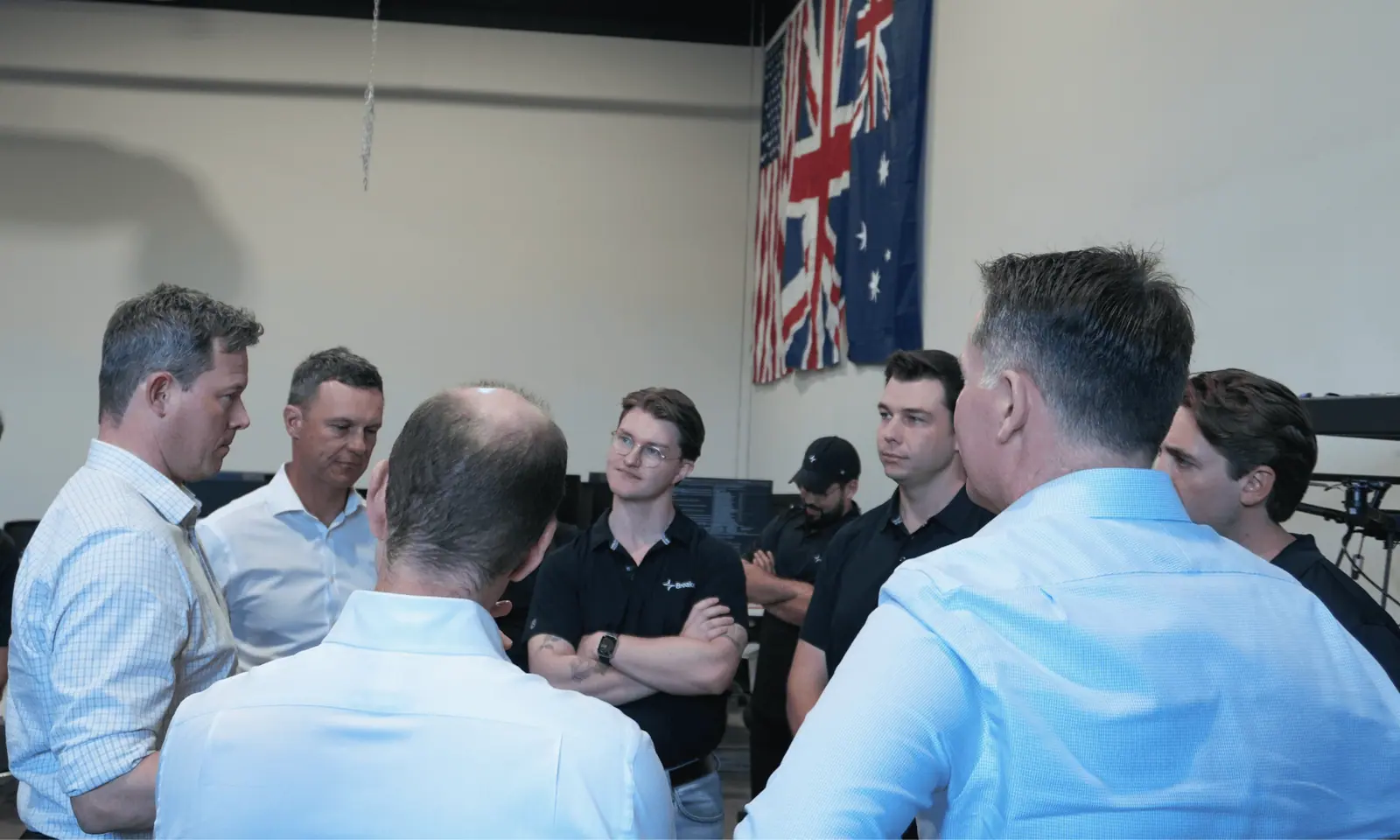
AUKUS turns shared priorities into shared work
AUKUS Pillar II covers the advanced capabilities the three partners build together, and autonomy sits at its center. In May 2026, the three defense ministers reaffirmed "the critical importance of accelerating the delivery of advanced capabilities under AUKUS Pillar II"5. They also committed to widening the license-free environment for defense trade between the partners5.
Political support in Washington is firm. Asked about the pact in October 2025, President Trump said "we're just going full steam ahead"6.
Breaker is what that collaboration looks like
Breaker operates across Australia and the United States as a single company. Its engineers work from Sydney and Austin for the same warfighter. That model depends on AUKUS, because Pillar II lets a company of Breaker's size build for both countries at once.
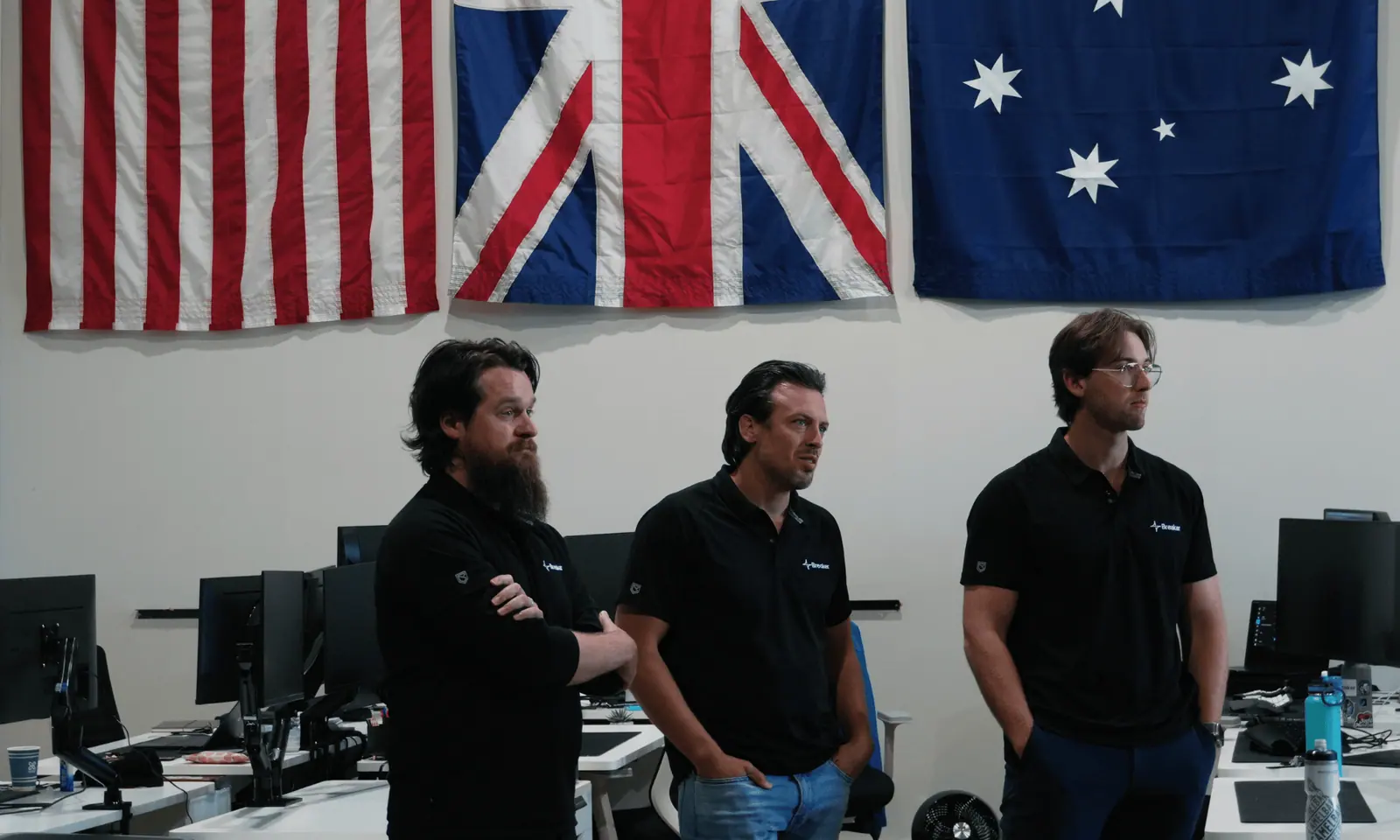
The visit made that model visible. Senior Australian Army leaders came to a US office to see autonomy built for their soldiers by an Australian company. On 4 September 2026, Major General Brown, Brigadier James Kidd and Captain Rhys Turner continued the conversation at Breaker's Sydney office.
- 1 Australian Government, 2026 National Defence Strategy and Integrated Investment Program, 16 April 2026. ↩
- 2 ABC News, Defence spending to lift by $53 billion over the next decade, 15 April 2026. ↩
- 3 DefenseScoop, Billions for new uncrewed systems and drone-killing tech included in budget request, 26 June 2025. ↩
- 4 US Army, War Department asks industry to make more than 300K drones, quickly, cheaply, 3 December 2025. ↩
- 5 Australian Government, Joint Statement, AUKUS Defence Ministers' Meeting, 30 May 2026. ↩
- 6 ABC News, Trump says AUKUS is going 'full steam ahead', 21 October 2025. ↩