
Breaker keynotes the Australian British Defence Catalyst in London
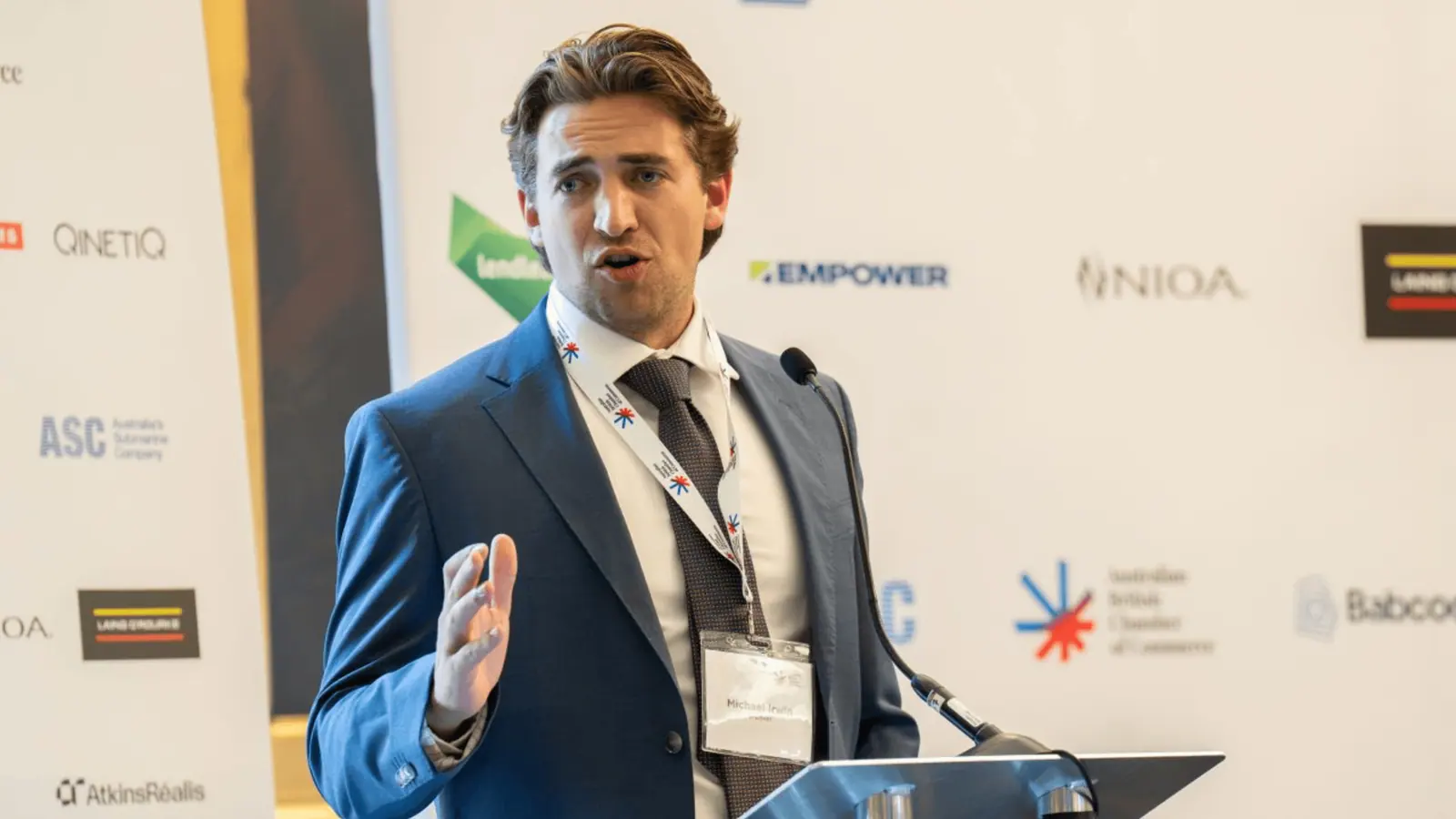
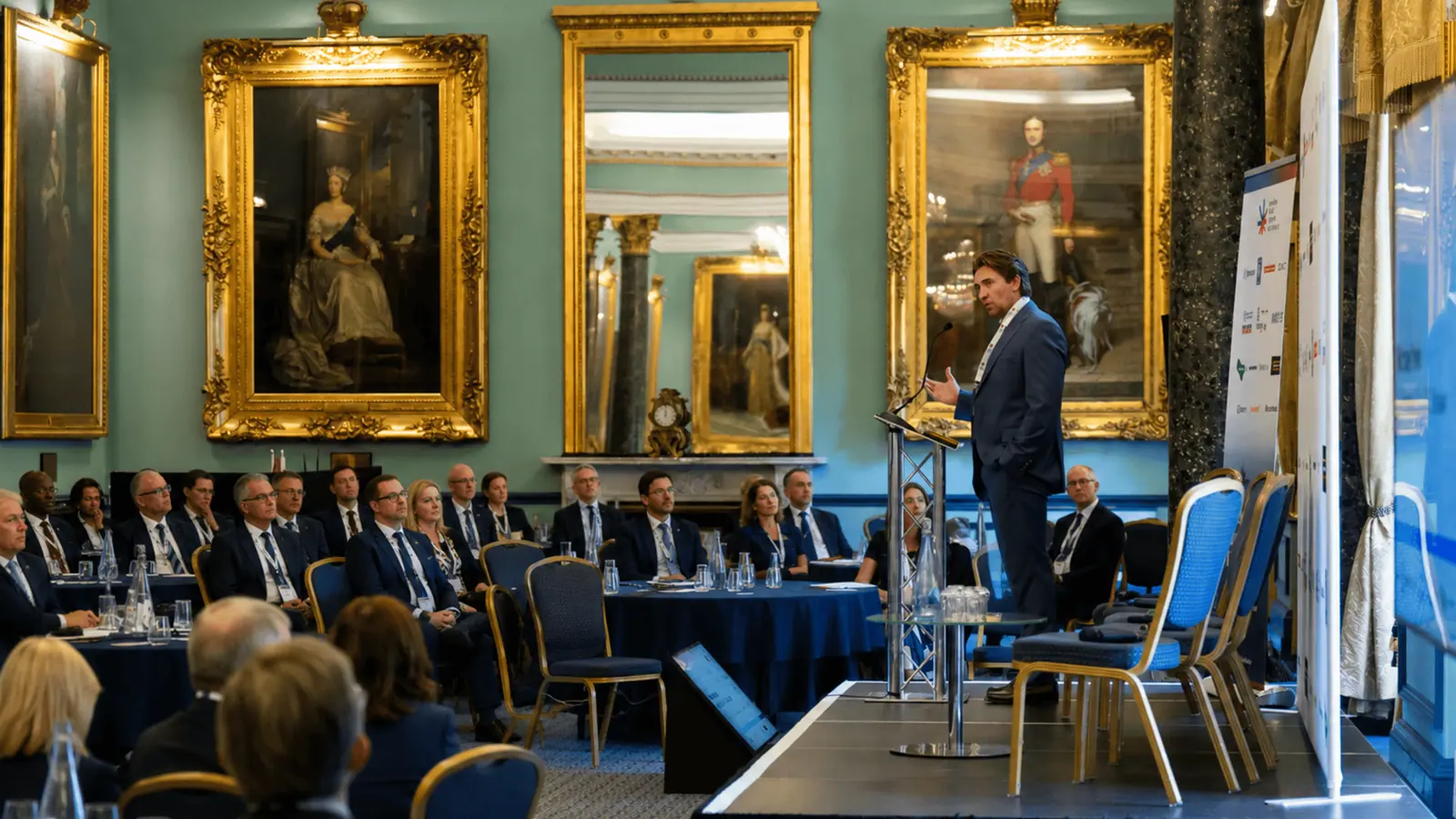
Breaker Co-CEO Michael Irwin gave a keynote on day two of the Australian British Defence Catalyst in London, on software and autonomous advantage. He then joined a panel on where the fight is heading, alongside Space Machines Company, C2 Robotics, QinetiQ and Hypersonix Launch Systems. The day closed at Mansion House with the Catalyst Dinner and an address from General Sir Patrick Sanders, former Chief of the General Staff.
The Catalyst ran from 14 to 17 July 2026, just ahead of the Farnborough Airshow, and focused on industry engagement on AUKUS1. It came as Europe commits to its largest rearmament in a generation.
Europe is rebuilding its forces around uncrewed systems, and it needs the software to command them. AUKUS lets an Australian company build that software for all three partners, and London is where that conversation now happens.
Michael Irwin, Co-founder and Co-CEO, Breaker
Europe is rearming
At The Hague in June 2025, NATO allies committed to spend 5% of GDP on defense and security by 2035. At least 3.5% goes to core defense requirements2. The European Commission's ReArm Europe plan aims to mobilize up to €800 billion for defense over four years3.
The requirement has changed
The money is going to a different kind of force. The UK's Strategic Defence Review of June 2025 commits to 2.5% of GDP on defense by 2027, and to 3% in the next parliament if conditions allow4. It also pledges to make the British Army ten times more lethal, combining armor with AI, software, long-range weapons and land drone swarms5.
The review sets out a new mix for the Army, known as 20-40-406. Twenty percent of its capability is crewed platforms such as armored vehicles and helicopters. Forty percent is reusable uncrewed systems, and the final forty percent is consumables such as one-way attack drones. Four fifths of the force, in other words, will not carry a crew.
That shift comes straight from Ukraine. A force built on that mix needs software that can command large numbers of uncrewed systems, and it needs far fewer operators per machine than today.
Why AUKUS matters from London
For the United Kingdom, AUKUS ties its rearmament to two close partners. In July 2025, the UK and Australia signed the Geelong Treaty on building and operating SSN-AUKUS submarines7. In May 2026, the three partners announced the first Pillar II signature project, uncrewed undersea vehicle payloads due from 20278. They also agreed to widen the license-free environment for defense trade between them8.
For too long in AUKUS, we talked too much and delivered too little. That has now changed under our three governments.
John Healey, UK Secretary of State for Defence, May 2026
For Australian companies, that license-free environment is the route into Europe. Breaker holds AUKUS Authorised User status, which lets it export to the United States and the United Kingdom without a license9. Its Industry Growth Program project funds an expansion into the United Kingdom as a gateway to European allied markets.

Breaker now works from Sydney and Austin and is building toward London. The Catalyst showed why that matters. Europe is buying autonomy at scale, and AUKUS is how an Australian company earns a place in that market.
- 1 Australian British Chamber of Commerce, Australian British Defence Catalyst (ABDC) 2026. ↩
- 2 NATO, Defence investment and NATO's 5% commitment. ↩
- 3 European Parliament Research Service, ReArm Europe Plan/Readiness 2030769566), 2025. ↩
- 4 Wikipedia, Strategic Defence Review (2025)). ↩
- 5 ITV News, Healey vows to make Army 'ten times more lethal', 1 June 2025. ↩
- 6 Forces News, Explainer: what 20-40-40 means and how it will transform the Army's battlefield. ↩
- 7 USNI News, UK, Australia sign treaty ahead of developing new AUKUS attack boat, 30 July 2025. ↩
- 8 Australian Government, Joint Statement, AUKUS Defence Ministers' Meeting, 30 May 2026. ↩
- 9 Forbes Australia, Autonomous defence startup Breaker orchestrates a $9m seed raise, 17 February 2026. ↩